Stage payment inspections
Your builder asks for the next payment. Is the work actually there? One visit gives you the answer in writing.
The problem with stage payments
Most home building contracts pay the builder in stages. The risk is paying ahead of the work: if more money goes out than the work on site is worth, you carry the loss if the builder stops, disappears or goes bust.
Foundations
Depths, widths and concrete checked against the engineer's design.
Payment 1Walls
Damp-proof course, cavity insulation and wall ties before they're hidden.
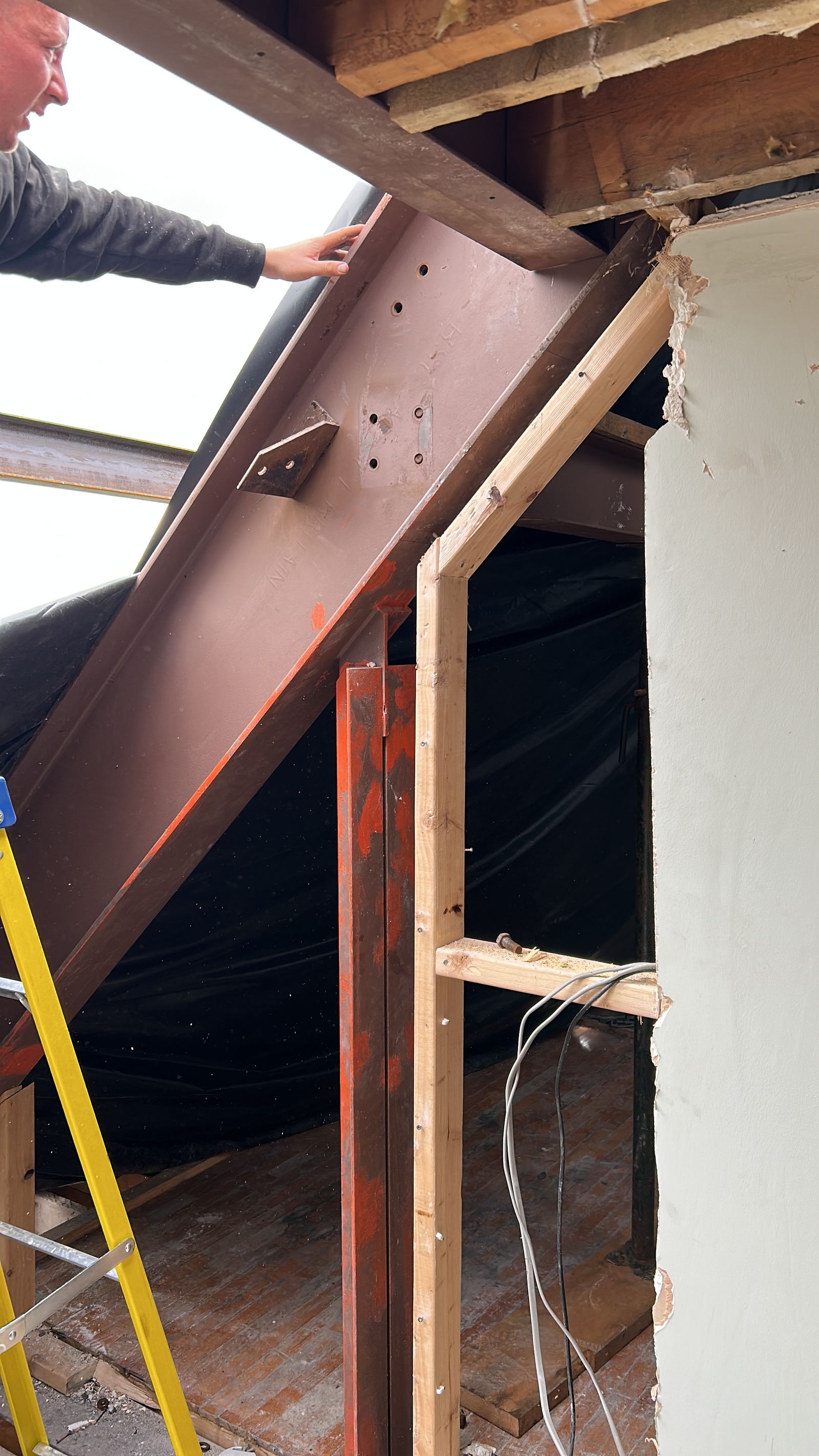
Payment 2Structure and roof
Steels, padstones, rafters, membrane and flashing.
Payment 3First fix
Wiring, pipework and insulation before plasterboard goes on.
Payment 4Finishes
Plaster, second fix, glazing and floors.
Payment 5Handover
Snagging agreed, certificates collected, then retention released.
Final payment
What I check
- Whether the work claimed is complete, part-complete or not started.
- Whether it matches the drawings and specification.
- Visible workmanship issues that should be put right before you pay.
- Whether building control inspections due at that stage have happened.
What you get
A short written report with photos, a recommended payment figure and anything to raise with the builder. You decide what to pay, with evidence behind you.
Questions
How many visits will I need?
Usually one per payment stage. Most extensions have four to six stages, but you can book only the big ones.
Is this the same as a building control inspection?
No. Building control checks compliance with the regulations. I check the work against what you're paying for and flag quality issues, on your behalf.
Can you help if I'm on a Self Build Wales loan?
Yes. Stage-based releases suit independent checks well, and professional fees can be included in that loan where applicable.
Not sure what help you need?
Tell me about your project and I'll tell you honestly whether you need me.